01
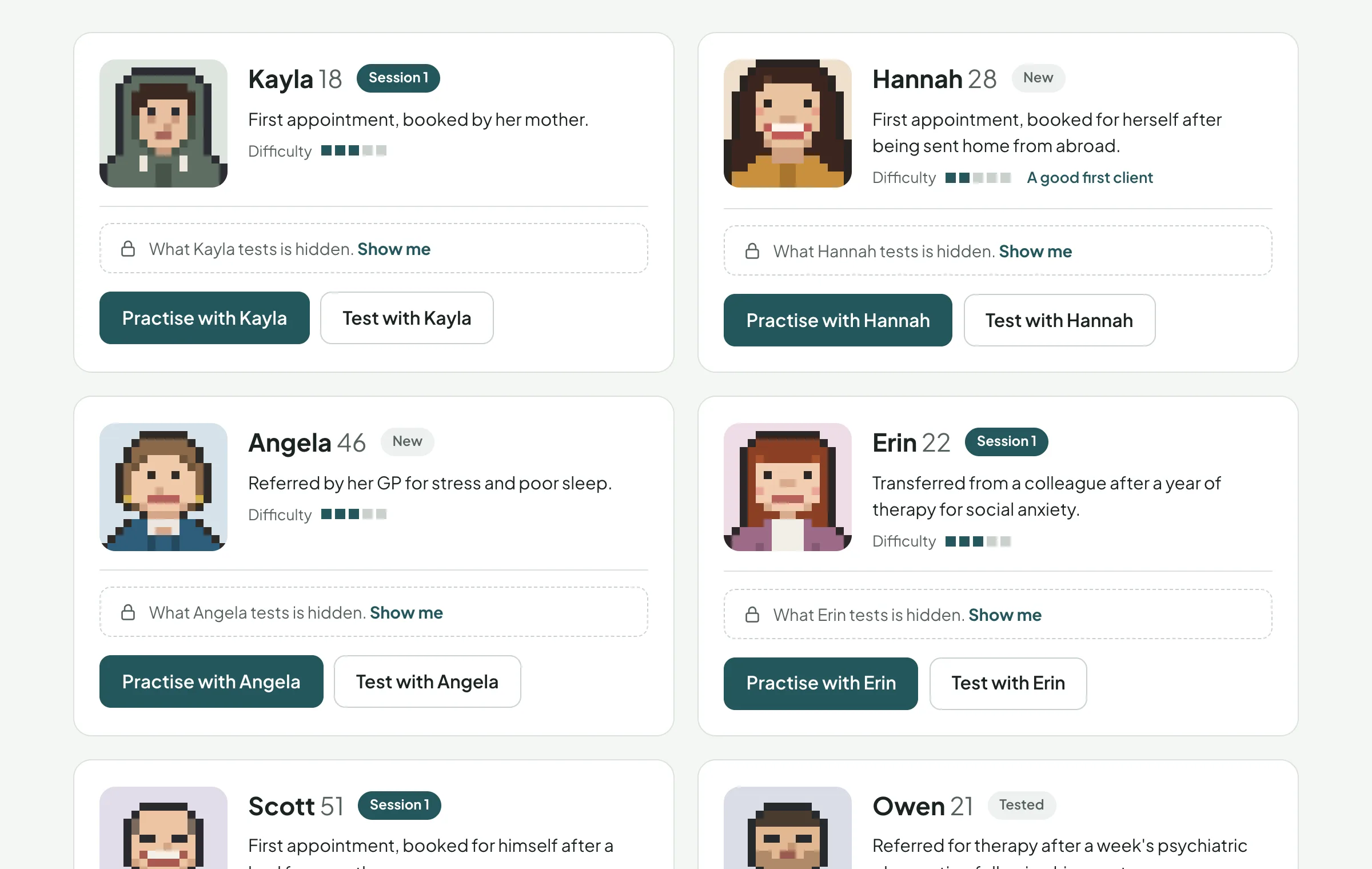
A range of clients to choose from
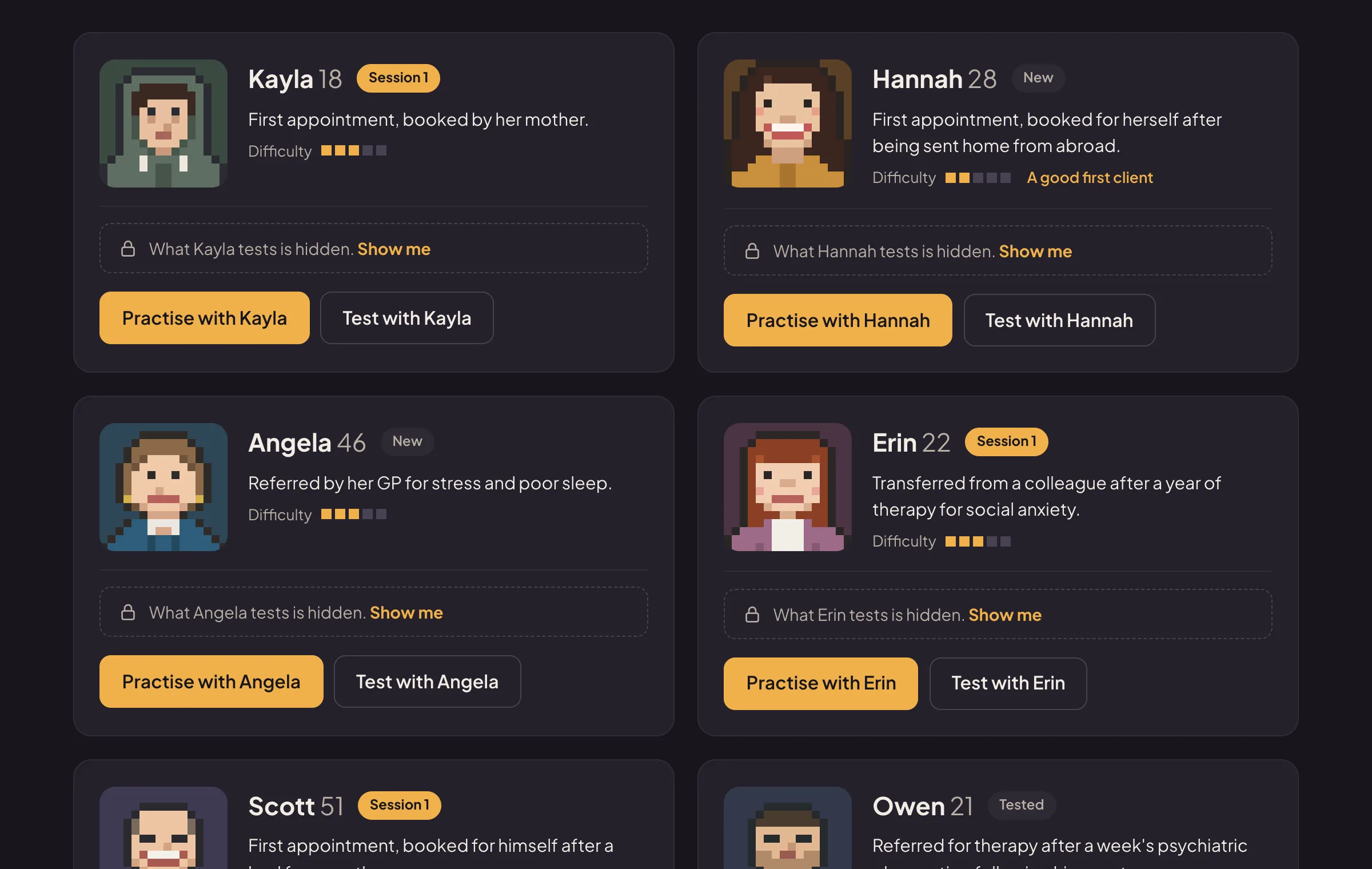
Clients built from real cases, each with their own memories, personality, triggers and challenging behaviours, and a story that unfolds over several sessions depending on how the trainee works with them.
02
Let them practise, or set assignments
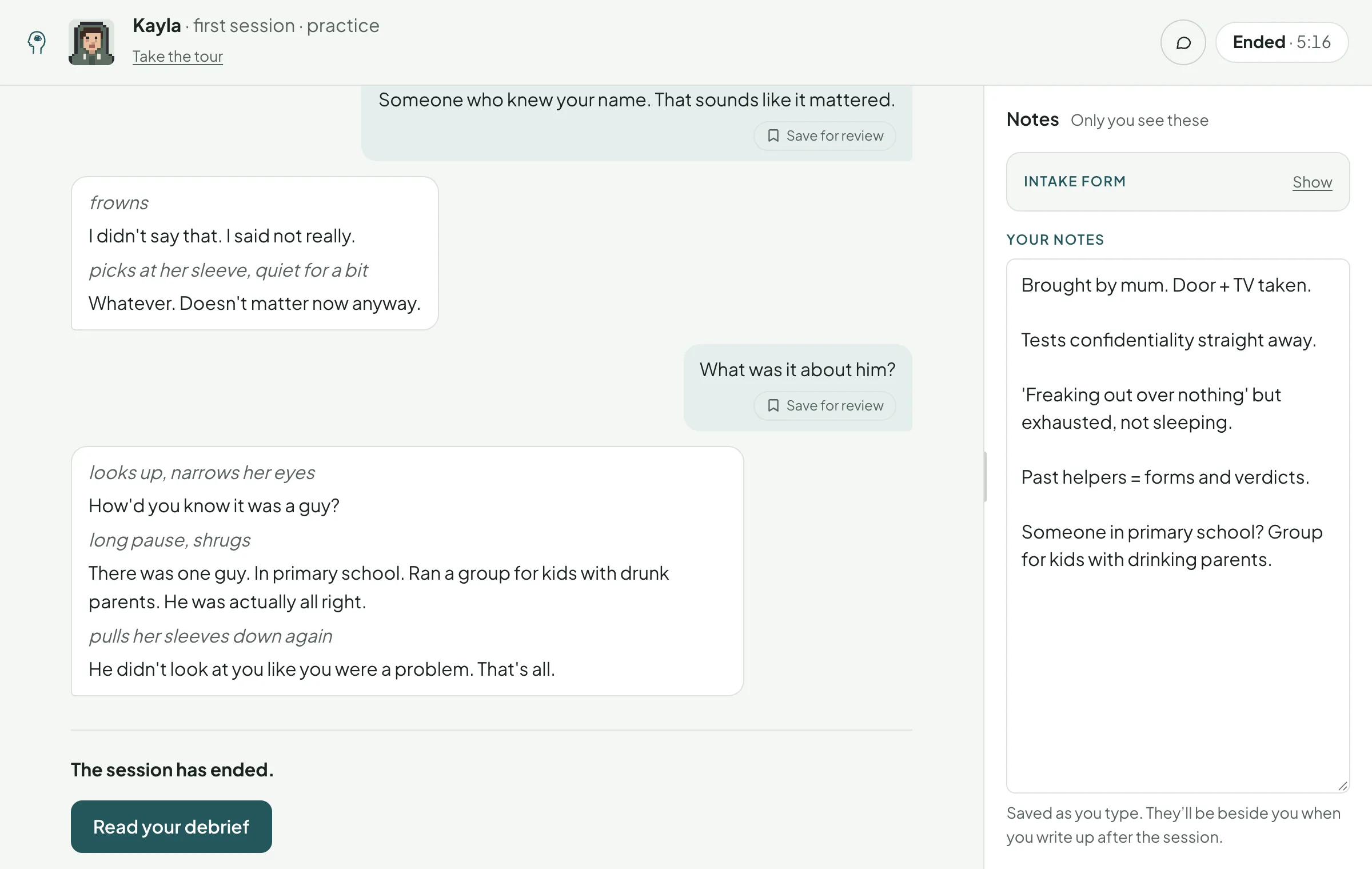
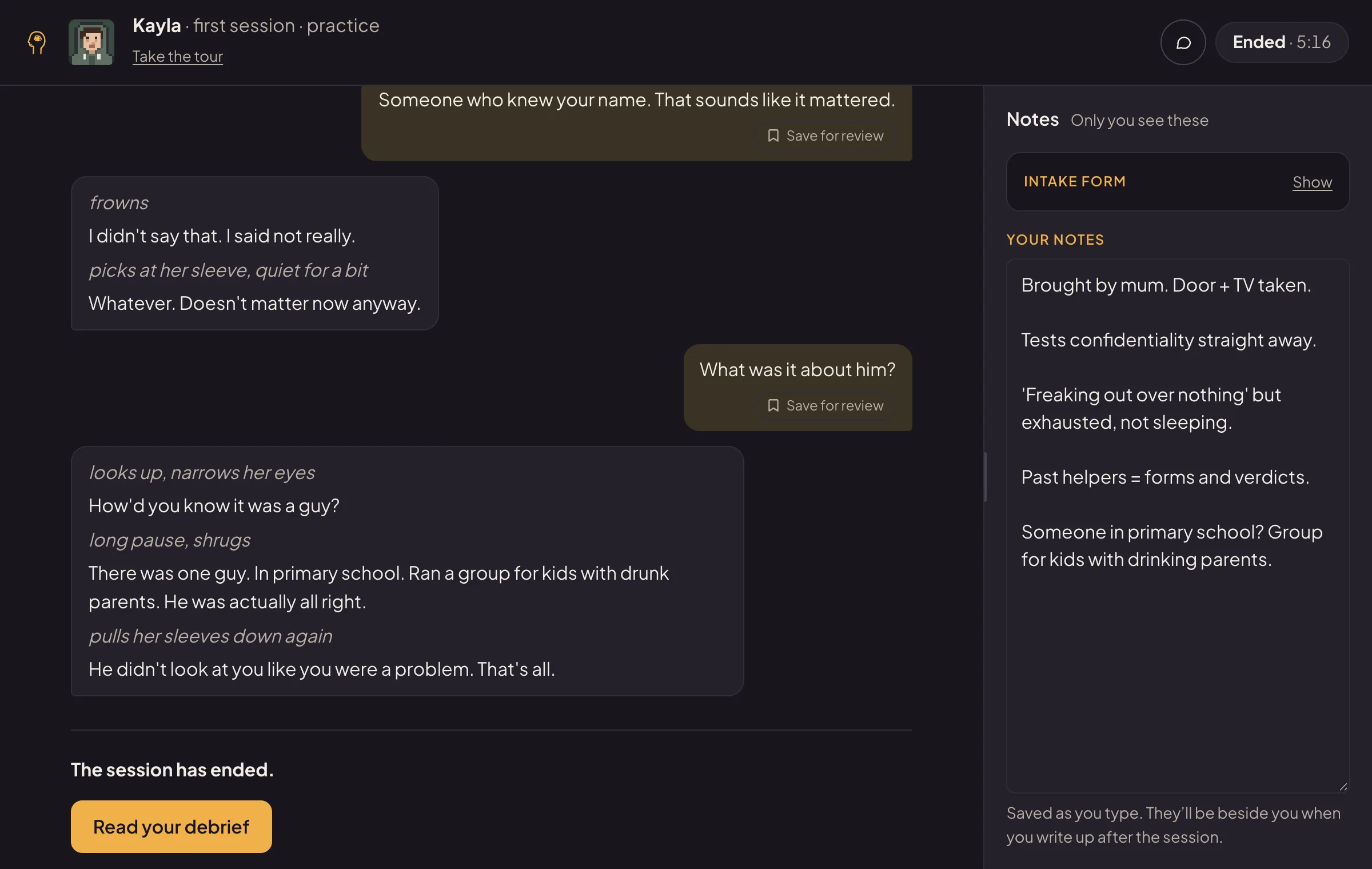
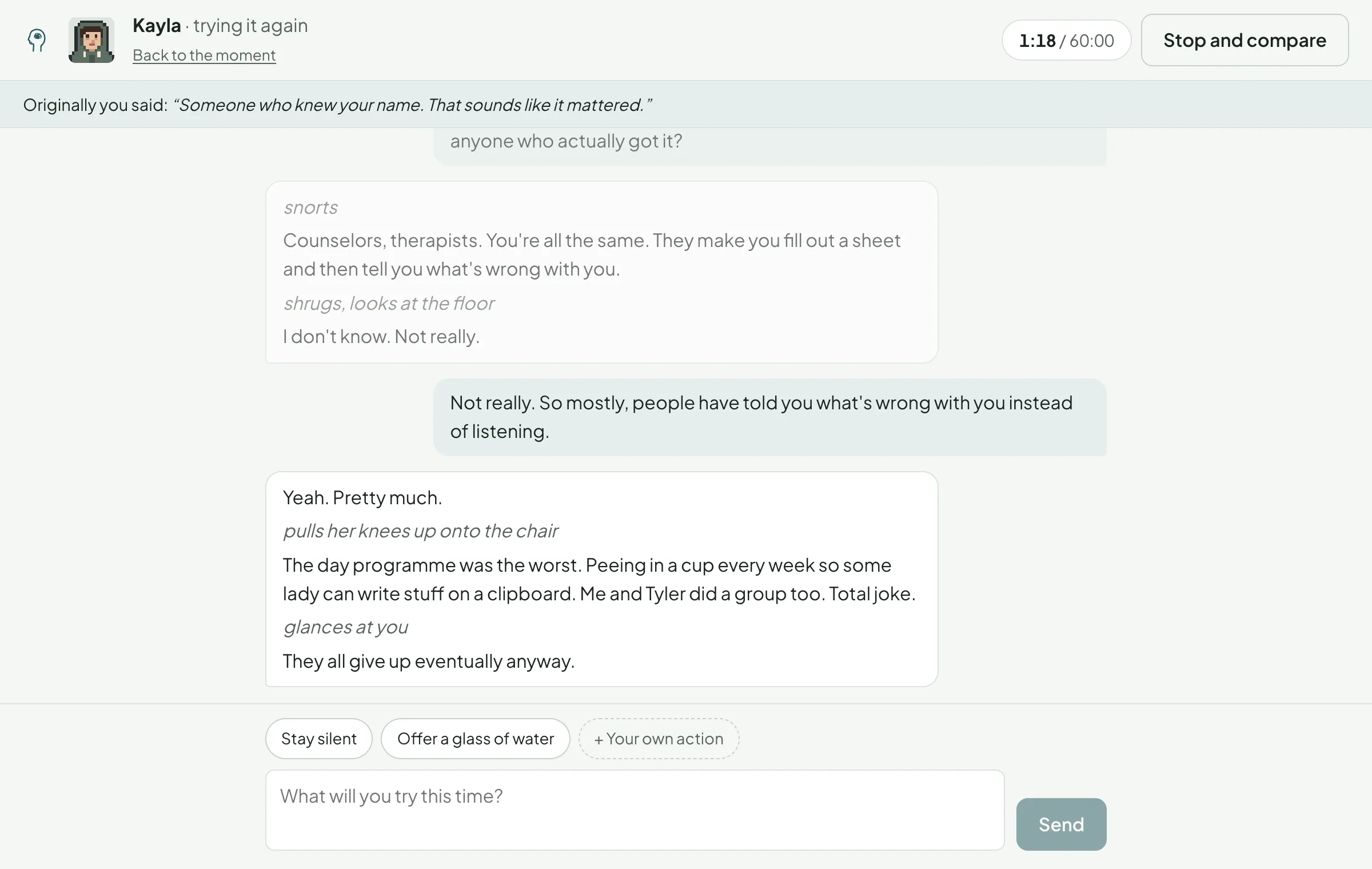
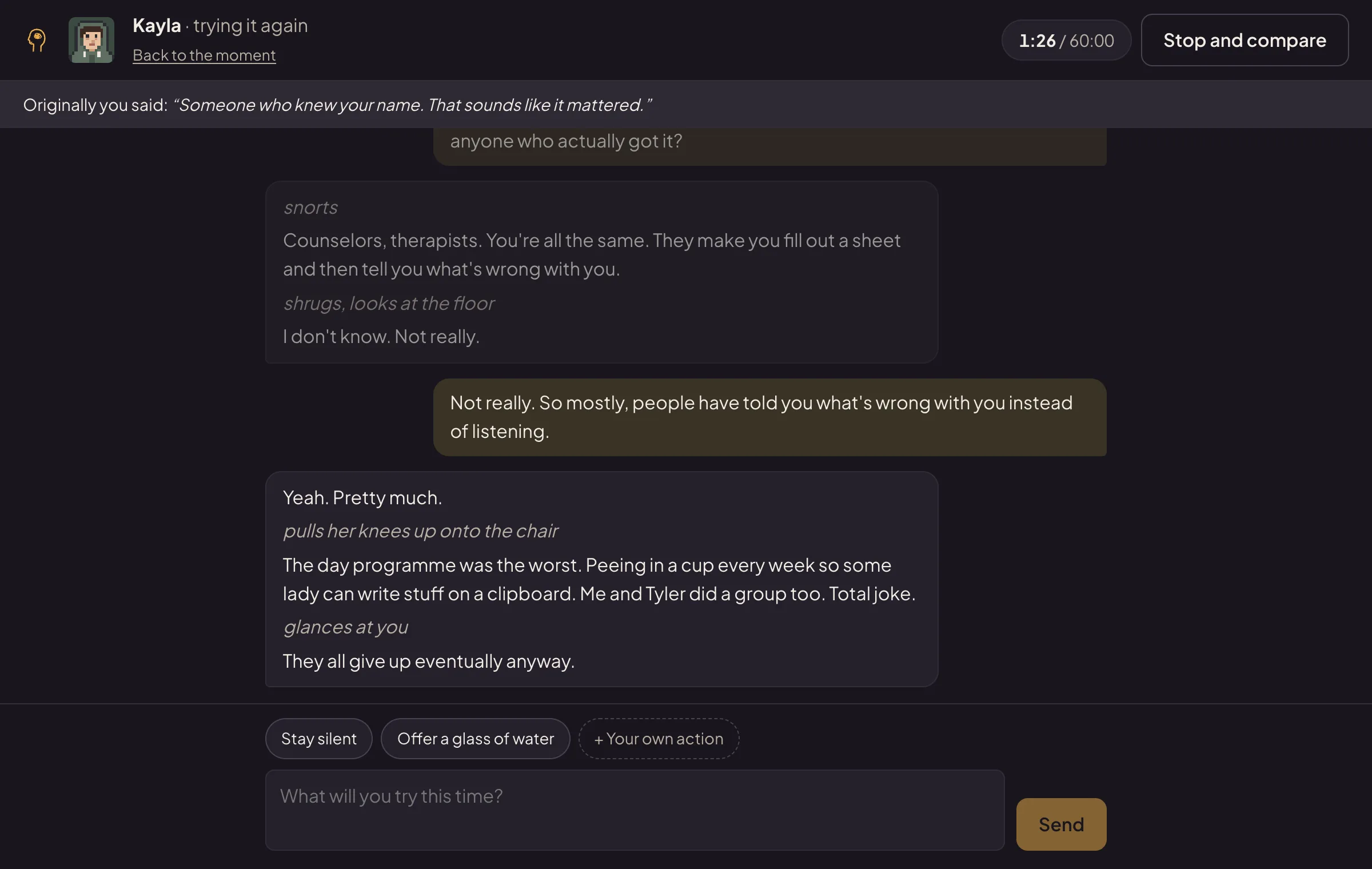
A realistic session where the client shows as much as they tell: the shrug, the long pause, the glance away. Let trainees practise with feedback after every session, or set assignments to see where their skills really are.
03
Feedback after every session
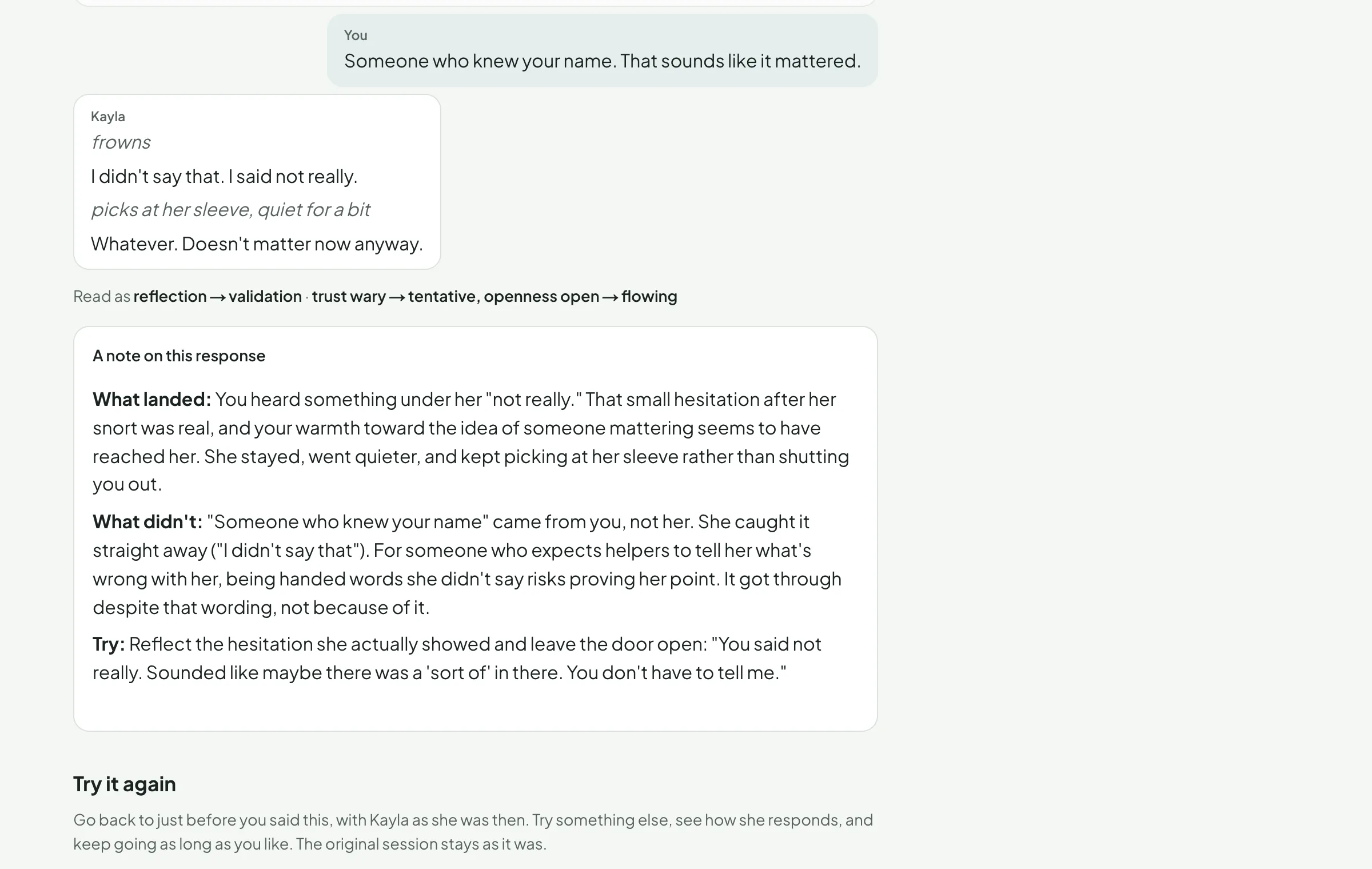
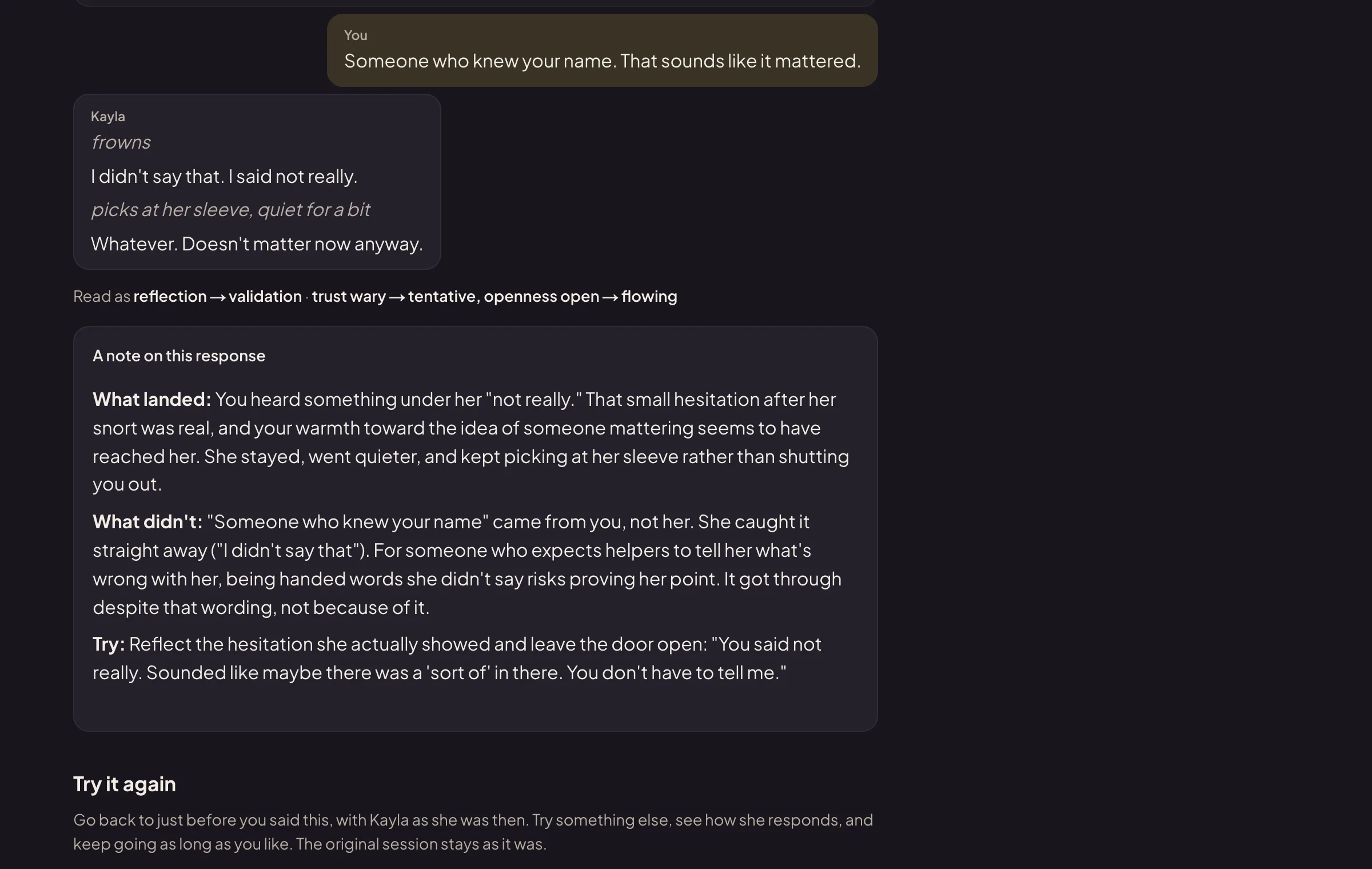
The detailed feedback there’s rarely supervision time for, straight after every session: how the trainee’s case formulation compares with what was really going on, and their micro-skills, moment by moment.
04
Mistakes become practice
Trainees go back to the exact moment it went wrong, try a different response, and see how the client takes it. The mistake happens here, not with a real client.
05
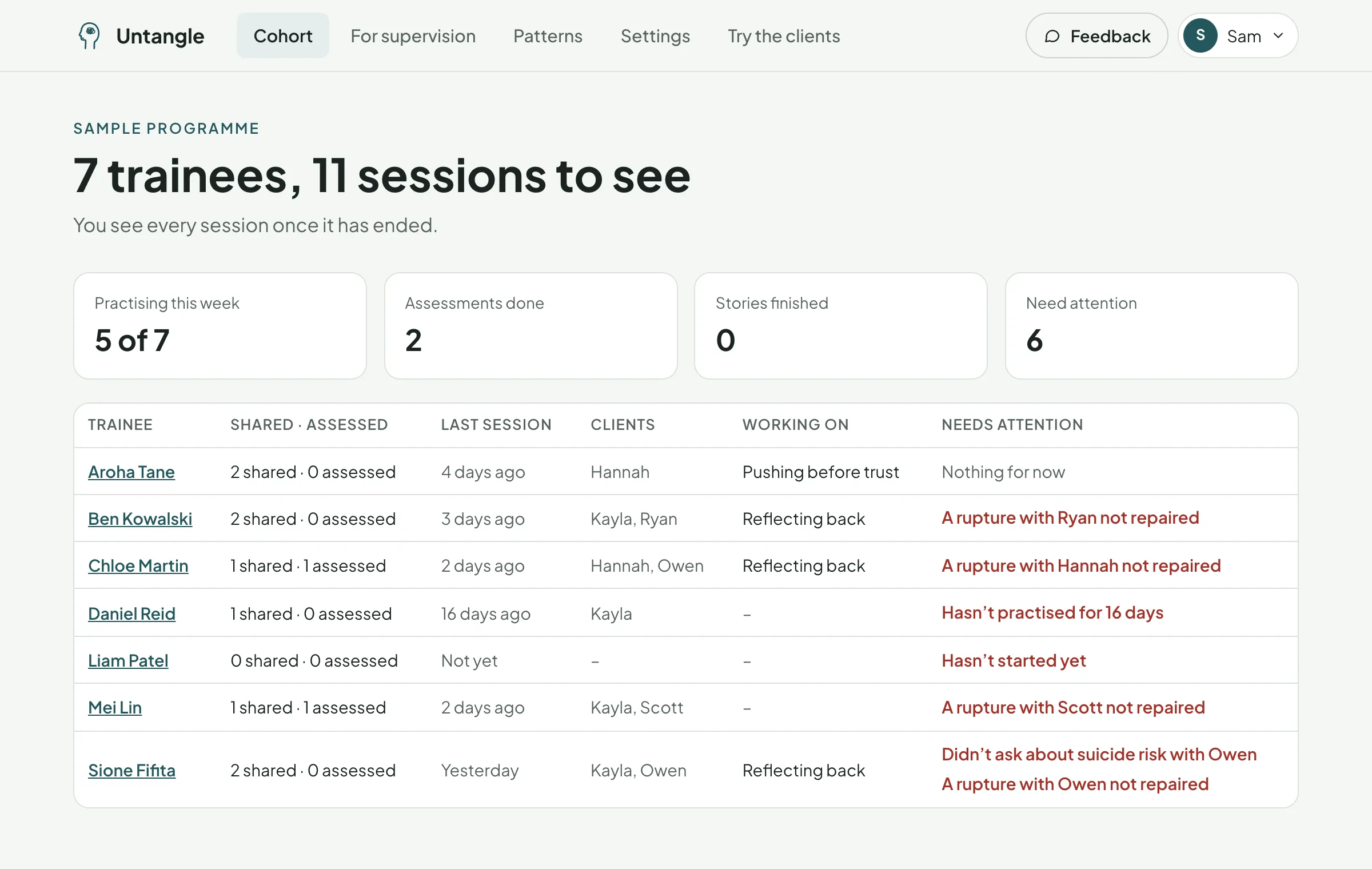
See every trainee’s progress
One board for the whole cohort: who’s practising, who needs attention, such as a risk not asked about or a rupture not repaired, and each trainee’s skills and habits, session by session.
Knowing isn’t doing.
Untangle gives your trainees the practice that turns knowing into doing, and doing into results.
Get a free trialThe problem
Practice is the missing piece. And it’s the hardest part to provide.
- 01
Trainees lack practice
They can describe a skill long before they can use it with a client in front of them, and there’s never enough practice to close the gap.
- 02
Role-play only goes so far
Real clients aren’t for practice, so role-play is the closest thing. But peers can’t play every presentation or target the skills you want, and actors are expensive.
- 03
Progress is hard to track
There’s no easy way to track progress, break clinical skills down, or see how trainees respond across a range of realistic scenarios.
How it works
Practise. Debrief. Try again. Get better and more confident with every session.
Find your practice
What do you want to practise?
From practitioners
“I’ve completed one session with Kayla, and it’s amazing how lifelike the AI character’s responses are! I had so much fun working through the case. It feels a lot like playing chess, but without a clock. You can pause, think through your next move, and take your time. It’s a fantastic tool for deliberate practice, with remarkably precise feedback. I got completely hooked! Now I’m curious to see what happens in the second session.”
“The training simulator was an excellent exposure to working with a client. As a professional who wants more exposure working with adolescents, it provided me opportunity to anticipate and imagine what a teen who is reluctant to therapy might project into the session. The timed element, the intake notes, and the generated responses gave the session a very immersive feeling. Certainly a platform to use for someone who needs to get some exposure and familiarity with a client group.”
See it for yourself
Try a few sessions yourself, then let’s talk about a pilot with your cohort.